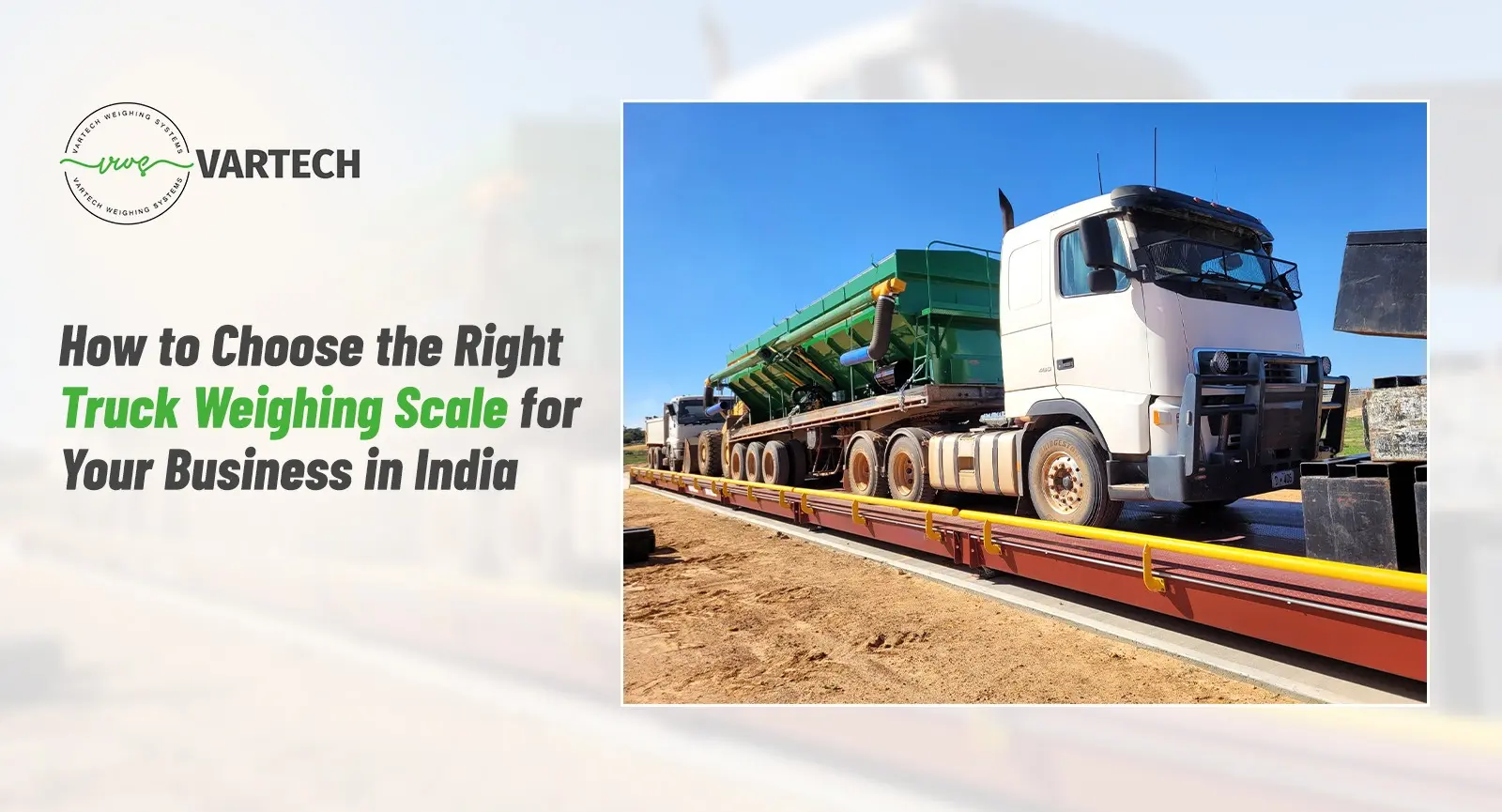
Quick Summary: Choosing a truck weighing scale means sizing for your heaviest truck, matching pit and deck type to your site, protecting the load cells, and meeting Legal Metrology rules. This article covers each decision, a maintenance rhythm, and the questions to put to suppliers.
Table of Contents
Every day, thousands of loaded trucks roll into Indian plants, mandis, warehouses, mines, and ports, and most get weighed. That single reading decides what you pay, what you charge, and whether a driver or a supplier trusts your numbers. Pick well, and it protects your margins. Pick badly, and every dispute lands on your desk. A truck weighing scale, also called a weighbridge, measures the full weight of a vehicle by letting it drive onto a steel or concrete platform supported by load cells. Choices that look small, like platform length, pit or pitless setup, and load cell type, change accuracy, affect cost, and legal safety for years. This article discusses each choice in the order that will be useful according to your working conditions, explains the Legal Metrology rules every Indian buyer must follow, and flags the mistakes that cost businesses the most. You will also find questions to ask weighbridge manufacturers before you sign an order.
Everything else about your truck weighing scale follows from your heaviest and longest vehicle. Indian truck scales commonly range from 30 to 150 tonnes, with platforms from 6 m to 20 m. A 9 m platform with 50 or 60 tonne capacity suits shorter rigid trucks, while 80 to 100 tonne multi-axle trucks and trailers usually need around 16 m or more. A platform shorter than the vehicle forces two-step weighing, which adds time and increases the chances of a problem occurring. Leave space above your heaviest gross weight, because overloaded trucks do arrive.
Imagine a cement dealer whose trucks carry 40 tonnes today but may switch to heavier multi-axle trailers next year. A small scale saves money now and forces a replacement later. A longer, higher-capacity platform costs more upfront and protects the investment.
Both truck weighing scales work well, but they suit different sites:
The platform is level with the road, so trucks drive straight on, so trucks drive straight on. The pit needs civil work, and it can collect water, mud, and debris, so drainage matters.
The platform stands above ground, with ramps on both ends. Installation is quicker, the underside is easy to inspect and clean, and you can often move the unit later. It needs space for the ramps, though.
Your climate and traffic decide this one:
Busy mines and plants often lean toward concrete, and flexible sites toward steel.
The load cells do the measuring, so check them closely:
Weak parts inside a solid platform lead to many accuracy complaints.
Not every site needs a fixed bridge. Portable axle weighers or mobile weighbridges suit temporary projects, quarries that move, and spot checks on several sites. They weigh axle by axle, so they take more time per truck. For daily trade with high volumes, a fixed truck weighing scale is the better choice.
Extras should solve a problem you already have:
Start with a simple truck weighing scale setup, and add features once your process needs them.
In India, a weighing instrument used for trade must be verified and stamped under the Legal Metrology Act, 2009, and its General Rules, 2011. Re-verification usually falls due every year, though states differ. Using an unverified or expired weighbridge is an offense, and an expired stamp can make your weighment slips disputable. Ask the truck weighing scale supplier for the model approval certificate and manufacturing licence details, because first-time verification often needs them.
A few habits help keep the readings reliable:
Small checks now prevent big disputes later.
Before you decide to buy a truck weighing scale, put these questions to each supplier:
Straight answers here matter more than a low price.
These errors show up again and again:
A site visit before purchase prevents most of these.
The right truck weighing scale is the one you stop thinking about. It reads true on a rainy Monday morning, passes inspection without drama, and keeps your records clean. Getting there takes a clear view of your vehicles, your site, and your rules, plus a supplier who asks as many questions as you do. Vartech Weighing Systems can help you match platform size, load cells, and software to your daily traffic, so every weighment you record is a number you can defend.
Truck weighing scale and weighbridge mean the same thing in most conversations. Weighbridge is the common term in India.
A pitless unit needs the platform length plus ramps and room for trucks to line up straight.
Most trade weighbridges fall under accuracy class III, and the Legal Metrology stamp confirms errors stay within limits.
Pitless steel units usually install faster than pit-type or concrete ones, which need civil work and curing time.
Yes, an indicator with a printer can run alone, but software helps if you need records, reports, or integration.